
Buyer's Guide
School Rugby Equipment Guide: Training Gear Built for South African Schools
Choosing the right rugby equipment for a school programme isn't about the flashiest brand — it's about kit that survives daily contact sessions, terms of hard-ground use, and rotating age groups from U/14 to First XV. This guide walks coaches, sports directors and procurement teams through what actually matters when specifying rugby training gear in bulk.
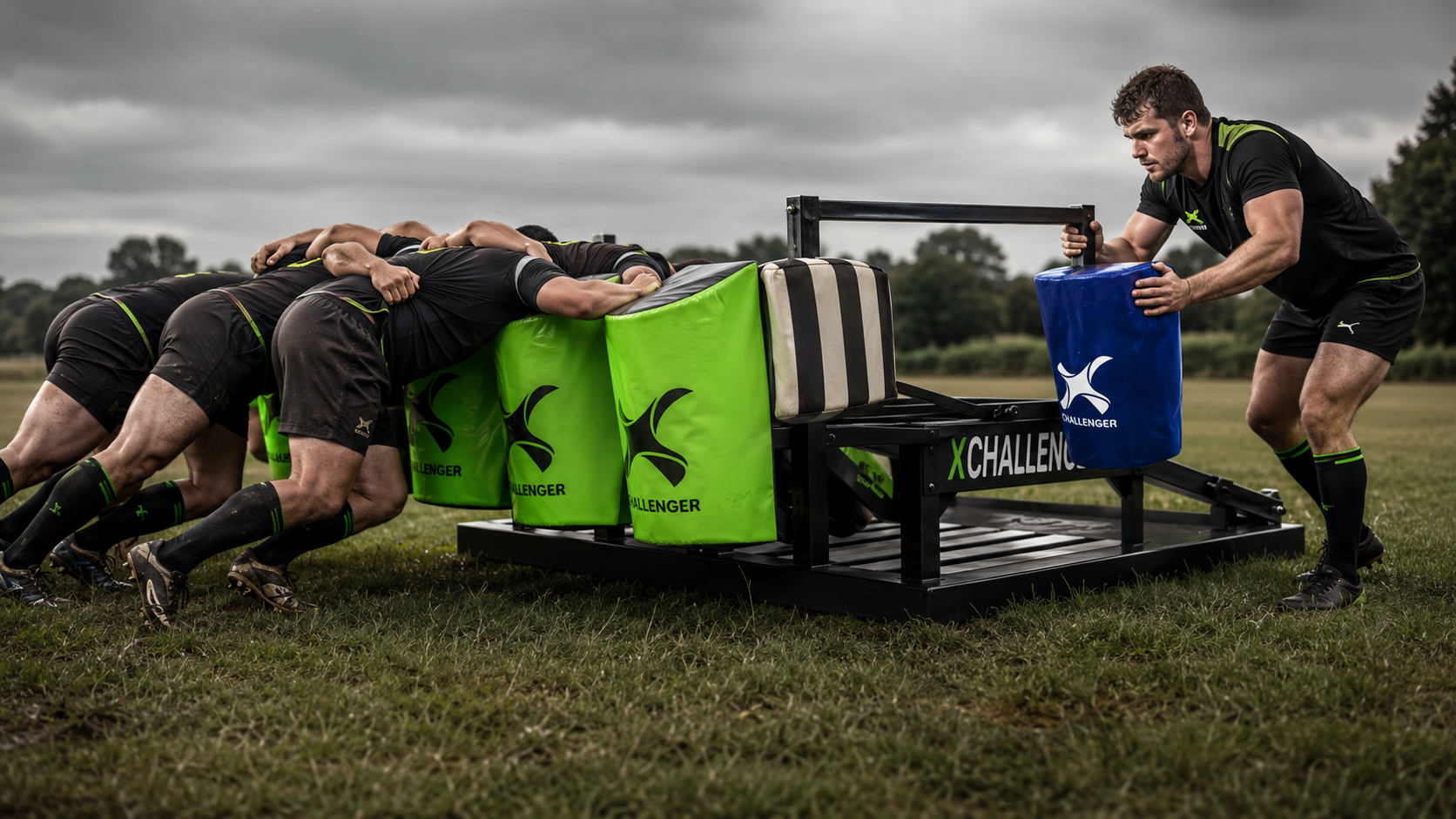
What Every School Rugby Programme Needs
A well-run school rugby setup covers four training pillars: contact, collision, conditioning and set-piece. The core equipment list is shorter than most people think — the difference between a good programme and a struggling one is usually quantity and durability, not variety.
- • Tackle bags — cylindrical bags in multiple weights for junior and senior groups.
- • Contact shields & hit shields — for one-on-one collision drills and ruck work.
- • Scrum sleds — 1-man, 3-man and 5-man units depending on squad size.
- • Rucking pads and wedges — for breakdown technique at speed.
- • Agility gear — cones, ladders, hurdles and tackle rings for warm-ups.
- • Match & training balls — separate stock for training vs. fixtures.
Durability: What to Check Before You Buy
A school programme puts 10x the wear on a tackle bag that a club side does. Bags get dropped on gravel, left in the sun, and hit by 200+ learners a week. Before committing to a supplier, check these specifications:
- • Outer material: 1000D or heavier reinforced PVC/vinyl — not fabric-wrapped foam.
- • Foam density: high-density closed-cell foam that recovers shape after impact.
- • Stitching: double-stitched, bar-tacked handles and seams.
- • Handles: wide reinforced webbing, riveted or box-stitched into the outer.
- • Scrum sled frame: powder-coated steel, replaceable pad units.
- • UV resistance: matters for anything stored outside or on open fields.
Sizing by Age Group
One of the most common procurement mistakes is buying senior-sized contact gear for junior groups. Under-15 players training with adult tackle bags reinforce poor body position because the target is too high. Stock separately:
- • Junior (U/13–U/15): lighter tackle bags (~4–7 kg), smaller contact shields.
- • Senior (U/16–1st XV): full-weight tackle bags (~12–18 kg), full-size hit shields, multi-man scrum sleds.
- • Match balls: Size 4 for U/13 and younger, Size 5 for U/14 upward.
Bulk Ordering: Getting the Most From a School Budget
School sports budgets rarely allow a full kit refresh every year, so bulk orders should be structured for a 3–4 year usable life with annual top-ups. A few practical rules:
- • Order in matched sets — 8–12 tackle bags and 6–8 contact shields per age group.
- • Get a quote, not a list price — bulk pricing on rugby equipment is almost always negotiable in the ZA market.
- • Ask about custom branding — school colours and crests on contact gear cost less at order time than as a retrofit.
- • Confirm lead times — plan orders around pre-season (Jan / July) so gear lands before contact training starts.
- • Split delivery — for large orders, split between senior and junior storage to reduce handling.
Storage and Maintenance
Even the best equipment fails early if it lives on a wet field. Keep contact gear off concrete floors, wipe down PVC surfaces after muddy sessions, and rotate stock so the same bags don't take every hit. Assign one coach or captain per age group as kit steward — programmes with this in place see contact gear last three to four seasons instead of one.
Ready to Kit Out Your School?
Challenger X supplies rugby training equipment to schools, clubs and academies across South Africa. Send us your squad numbers and we'll come back with a full bulk quote — including branding, lead times and volume pricing.